Showing posts with label Production. Show all posts

Wednesday, 14 January 2015

LOCATION SOUND

Dan Snow shoot
 Like many of the teaching staff at Bucks, I still get to be involved on professional productions from time to time. Eg. this recent corporate film shoot, a conference opener for IoD – with BBC presenter Dan Snow. I was the Location Sound Recordist, providing all sound equipment required and working alongside a small camera crew to capture the presenter’s pieces-to-camera.

The call time on location was 6am at IoD's HQ in central London, an early start even by filmmaking standards!
As for most shoots like this, I used a radio clip mic on the presenter. This enabled an even pick up of Dan’s voice as he walked around the building (up and down stairs, in and out of rooms, etc) and it’s normally better than trying to use a boom microphone for ‘walkie-talkie’ shots like this.

 It was shot using a Steadicam, used to track the Canon C300 camera smoothly around the location.
A steadicam in action
This needs to be perfectly balanced to keep the movement smooth, hence we needed to do away with the cable i normally run between the SQN sound mixer and the camera and instead use a wireless ‘camera hop’... basically a radio transmitter hooked up to the mixer and the receiver mounted onto the Steadicam rig. When working like this you need to run a backup recording, we used a Zoom H4N recorder.

The shoot was done and dusted by about 9am, at which point we enjoyed a bacon sandwich from a nearby cafe and went home. A good day at the office!

Location sound recording techniques like these are covered during the Sound Design modules of the course that make up 25% of the teaching in years 2 and 3. We have multiple location sound kits for students to use – all spec'ed to a broadcast standard with kit from Sound Devices, Sennheiser, and Audio Ltd etc

Al Green

Sound Design lecturer
My SQN 4S mixer and location kit

Thursday, 11 December 2014

BBC Introducing in partnership with AMP: Live performance from The Scruff, 10/12/14


Today was the first studio-based multi-camera production that we have undertaken as part of our new partnership with BBC Introducing.


Students from BA (Hons) Audio & Music Production, supported by tutor Dan Peters, captured the sound and their mixes will go to air on the BBC this weekend. The BBC have sent out this tweet: Recording @TheScruff_ at @bucksnewuni for #BBCIntroducing this Saturday night at 8pm on @BBC3CR
                   
Students who specialize in sports and live events production within BA (Hons) Film & TV Production, supported by tutor Gary Emmins, filmed both the live music performances as well as an interview with the band that was conducted by BBC Introducing presenter Gareth Lloyd.
           
This is what The Scruff had to say about their day:
“The students were great, totally professional. We were made very welcome and the whole operation was slick on every level. It’s been a pleasure to work with the students from Bucks New University.”

The videos will be presented on the BBC Introducing YouTube pages as from this weekend.


Tuesday, 25 November 2014

AMP involved in new partnership with BBC Introducing


On Wednesday December 3rd, guests from BBC Introducing will be on-site to launch a new partnership with the department of Production. The partnership will see AMP students capture and post-produce sound which will ultimately be promoted via the BBC Introducing YouTube site.

When asked about how the partnership with the BBC came about, Steve Partridge (head of department for Production) said: 

"We have been filming live music performances for a few years now and have gained a reputation for doing this pretty well. Colleagues from the BBC noted this during a visit a year or so ago and as a result agreed to my proposal that we might partner with them to support their remit from government to promote new music"

Steve continued,  
"The music [captured during multi-camera shoots] will be broadcast via BBC 3 Counties on the Saturday, and the video output will be promoted via the BBC Introducing YouTube site. 
This is increasingly a collaborative project that will engage all three course areas within the Department. The multi-camera crews comprise Film & TV Production students, the audio crews who manage live sound and post-production/mixing are Audio & Music Production students. And the aspiration for when we have installed our new Vizrt VR solution (likely to happen around Christmas), which is of great interest to our partners at the BBC, is that we will soon be able to offer the option of filming a band in a full VR set that has been created by animation students as a full 3D render that will then run in real time via the green screen studio facility."


Friday, 7 November 2014

Release The Bats - Live Music Recording


People say sound isn’t something you just hear, it’s something you feel. I certainly felt the sound, blasting out at around 110 dB for an assigned OB task; a video recorded live session of the band “Release the Bats”. Sounds simple, right? Jam a couple of microphones into an amplifier, throw a microphone at the singer and whatever microphone shaped objects are left get carelessly positioned around the drums. “Give it a raw feeling”. It doesn’t work like that, especially when you’re being assessed, and want to get the best sound opposed to doing the mother of all botch jobs. Before the actual day, preparations were made between myself and my peers, technical riders and stage plots were designed (on behalf of the band whom made communication a difficult process) and contingencies were prepared in the event of problems. The first problem we came across was the concept of an OB. In other words, we were being assessed on something we’d never done, and hadn’t used the equipment (a nice shiny Midas Pro2 digital desk) in over half a year.


Needless to say, I was worried about complete catastrophic failure on our part. When the ball got rolling, and we started setting up, nerves were eased. That was, until we encountered a problem with sending a direct link from the desk, upstairs to the recording studios. Using even more technology, known as Focusrite RedNet, we attempted to send all the audio directly to the studios without processing it on the desk. It’s another thing that we’ve never done before, and encountered a problem almost instantaneously, no sound. This is bad, but we quickly found the missing link that was causing the whole issue, a good old trusty router. Who would have thought of it? Certainly not us, that’s for sure.


This is all before the band has arrived, in typical punk fashion, they arrived little over an hour late, and this is where the show began, things started to become real, and everyone had to put their professionally first. Lines had been checked, and it was all about getting the best damned sound with the given environment, until we realised that the monitors weren’t plugged in. It was a bit funny that the band weren’t getting any vocals through their monitors. Without further ado, they were plugged in, line checked, and appropriate monitor feeds were sent as requested. Simples.


Not only did we have to record the sound for the OB, sending a premix to the PT Recorder (which records all the sound and the video together), we had 48 hours to do a studio rough mix, with a 48 hour turnaround. Mixing the drums wasn’t so much of a problem, sampling the drums to compliment the recorded drums assisted the mix, it’s the vocals that caused the greatest issue. Tune? Dynamic control? Vocal technique? It’s like he not only ignored the conventional singing technique, but done the exact opposite. Performance value was great, but recording quality was a difficult thing to work with in the studio. There was no amount of compression that could save the vocals, so the dynamics had to be ridden manually to ensure equal levels overall. That at least stopped it poking in and out of the mix, the tune and melody was the second and bigger problem. Autotune was out of the question, using Melodyne, a pitch correction to gently shape the vocalist’s tune was also impossible (due to bleed and sharing microphones), so what do you do when you can’t make it sound better? A lightbulb moment, make it sound worse. Adding grit and distortion to the vocals made the tune somewhat irrelevant, as a matter of fact the imperfect tune complimented a rawer mix.


Overall, the entire production was challenging, but successful. It’s taught us all how to work together, collaborate with video students, liase (or attempt to liase) with bands, and informed us how important getting a decent sound right off the bat (haha, get it? Release the Bats? Okay, I’ll stop). There was certainly room for improvement, but it wasn’t a failure either. I’d quite happily do an OB under similar circumstances, with the newfound knowledge of the technical understanding within Outside Broadcasts, and from which, can only improve the end result and product.


Wednesday, 24 September 2014

Recording Rooney

One part of recording that is increasingly in demand and yet often overlooked is that of the voiceover.
Its can mean long dull (yet often lucrative) days of simply pressing record with little or no creative input at all. Conversely if directing as well it can be very enjoyable.

I have a lot of experience in voice direction and recording dialogue for computer games. Each game has a standard of four languages in addition to English, commonly referred to as FIGS - French Italian, German and Spanish. so 4/5s of the dialogue you record and then edit isn't even in English.

Its not not uncommon for games to have upwards of 11,000 lines in each language. You can imagine the monotony of recording editing and managing 55,000 wav files, most of which aren't even in English.

However, sometimes there are terribly exciting days. Much like my Monday. M'colleague, Hugh Edwards, "renowned" voice director, and I packed up the car and headed to Old Trafford to record three Manchester United players for a gambling application.

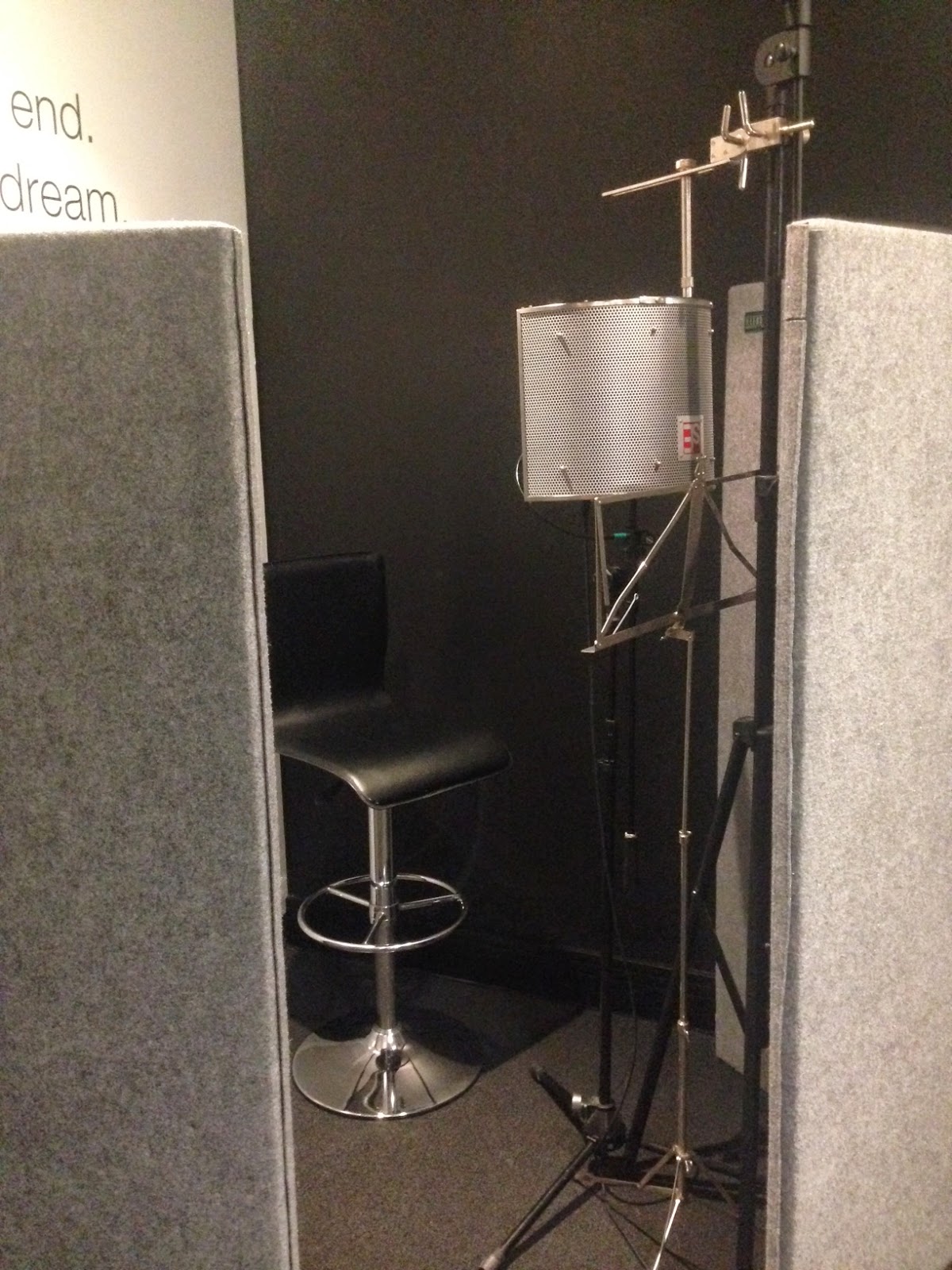
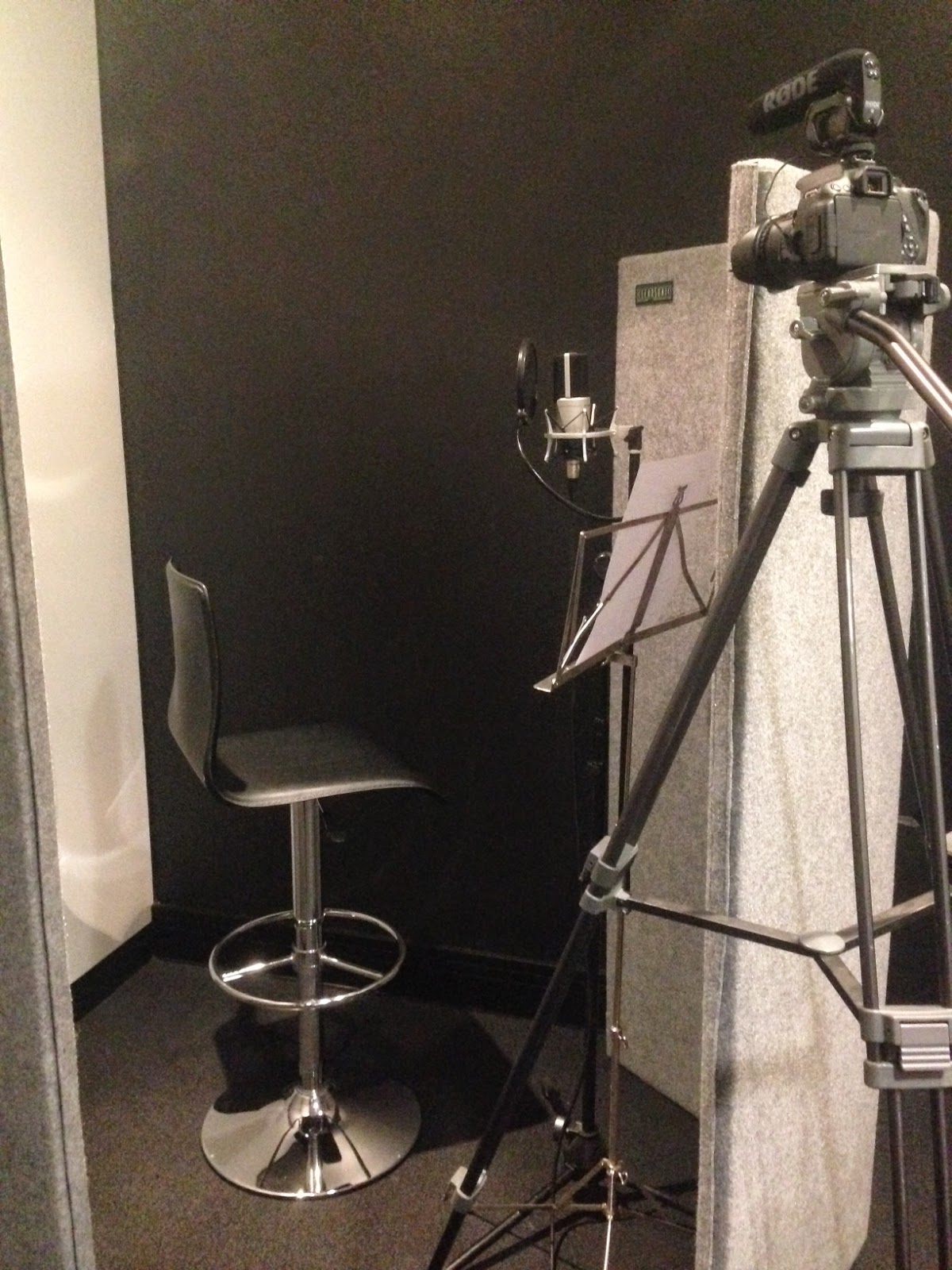
We took two mobile rigs with us consisting of a mobile booth (or sound boards) Macbook Pros running ProTools, Focusrite 2i2s and a Sennheiser MK4 mics along with various cables and baffles etc.

The players we were to record were Rooney, Fletcher and Rafael. We had a limited amount of time and there was a Motion Capture set-up which had to film some facial movements. Once we were set Hugh decided the easiest way was to cue the players with their lines as opposed to letting them simply read the script.

This entailed Hugh reading each line and the players then repeating (almost) exactly what Hugh had said and how he had said it. We ran two lines for level for each player and ran the whole script twice for each.

Once set we were done within an hour - Audio Ninjas!!!


Tuesday, 23 September 2014

Hattie Brigg's First Single Release


2014 BBC2 Folk Award Nominee Hattie Briggs has her first single out now from her debut album Red and Gold which will be released in 2015. Produced and Co-written by Associate Lecturer Peter Waterman and Mixed by Audio/Music Production Lecturer Warren Bassett.

Pictures and stories from the Pre-Production, Recording process at Monnow Valley Studios and the Mixing stage will be added to the blog later on in the year.

Thursday, 18 September 2014

Work Experience & beyond! Adam Whalley @ Team Rock


In the summer of 2013, in between second and third year - my favourite DJ from the only major national rock radio station (planet rock) left, to join a new station that was forming, Team Rock. Upon initial listens to the test transmissions I could tell there were some issues with the sound - and I decided I’d send an email to the head of radio, a guy called Moose. I told him the issue, and then proceeded to get a bit of work experience largely on my basis of my great knowledge of broadcast audio (lie) and my expert skills in making cups of tea (bigger lie). He then enquired about my degree and asked about what I do and invited me in to meet them all, so expecting nothing but an insight into a radio station - I headed off to London and was met by Moose who proceeded to show me the little studios in the basement of a palatial building in London. I was then showed their spare audio studios, where they wanted to record sessions. They asked can I do it? Of course I said yes, and from there I was taken to the roof garden to discuss an equipment list that needed to be bought.

Since then, I’ve had the privilege of working for a growing company, and working in a great team of people who really think outside the box and try and do things differently. At Team Rock Radio, there are no adverts and that means we can play whatever we like, whenever we like and provide listeners with a variety that really hasn’t been seen in ‘commerical’ radio for a very long time! Since I joined the company, they’ve won awards and established a fan base which is ever growing - as well as syndicated some of the shows abroad meaning some of the sessions I produce are played in varying countries to potential audiences above 10 million! It’s something I’m massively proud to be a part of.

There is also the small matter of the artists I’ve been privileged enough to work with, and the list is ever growing, but headed by massive names such as Slash, Richie Sambora (Bon Jovi), Joe Bonamassa, Alter Bridge, Scott Stapp, Black Star Riders (the current carnation of Thin Lizzy), Glenn Hughes (Deep Purple) and many more. I’ve met other great artists, and really learnt that the music business isn’t such a scary place full of cut-throat and evil people - although that’s not to say I haven’t met a few unsavoury characters who I’d rather not meet again! I've learnt tonnes of new music, been to gigs and got albums that I never would of bought off my own back - and it's led to me getting some new favourite bands


From an audio point of view - I entered the job wanting to do it slightly differently. I didn’t want to constantly just chuck an SM58 on a voice and plug a guitar into a DI. We have such great equipment and potential in our studios here, I’ve tried to treat each session with a studio feel. Recording through great pre amps and converters into Pro Tools, and using professional and high end studio microphones to get that great sound! It’s great fun, and as a one man team I’ve had to learn and adapt extremely quickly, but It’s probably been some of the best experiences I’ve ever had!